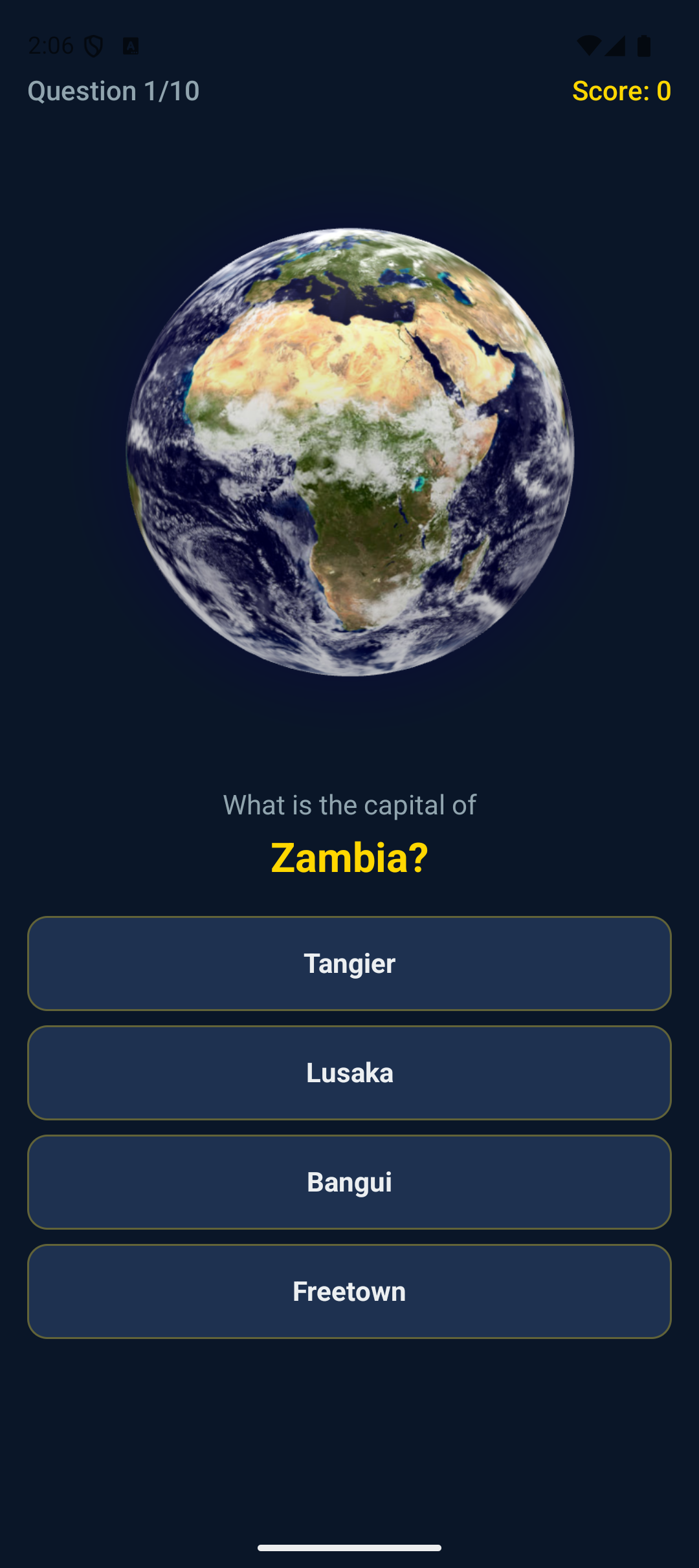
I built an Android app that quizzes you on African capital cities. It pairs each question with an interactive 3D globe that animates to the correct capital after you answer. No internet required – everything runs offline.
Why?
I wanted a quick way to drill African capitals and thought a spinning globe would make it more memorable than flash cards. Turns out Globe.gl renders beautifully inside an Android WebView, so the whole thing came together in a single weekend.
How It Works
Each round picks 10 countries at random from all 54 African nations. For every question you get 4 choices: the correct capital, two other African capitals, and one major non-capital city (like Lagos or Casablanca) to keep you honest.
Tap Start Quiz and you are dropped into the game. A NASA Blue Marble globe sits in the top half of the screen, centered on Africa. Below it: the country name and four answer buttons.

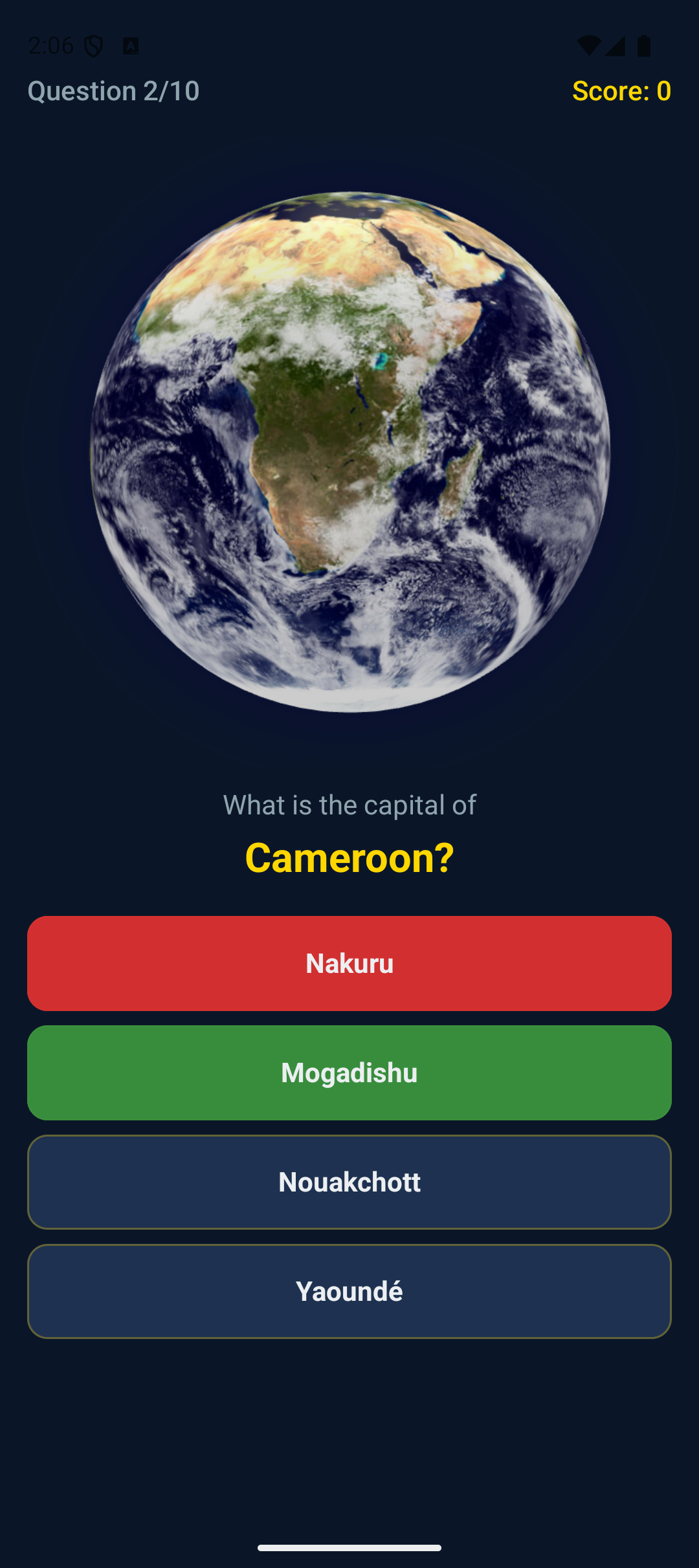
Pick an answer and the buttons lock immediately. The correct answer turns green, a wrong pick turns red, and the globe smoothly rotates and zooms to the capital’s coordinates with a red dot marker.
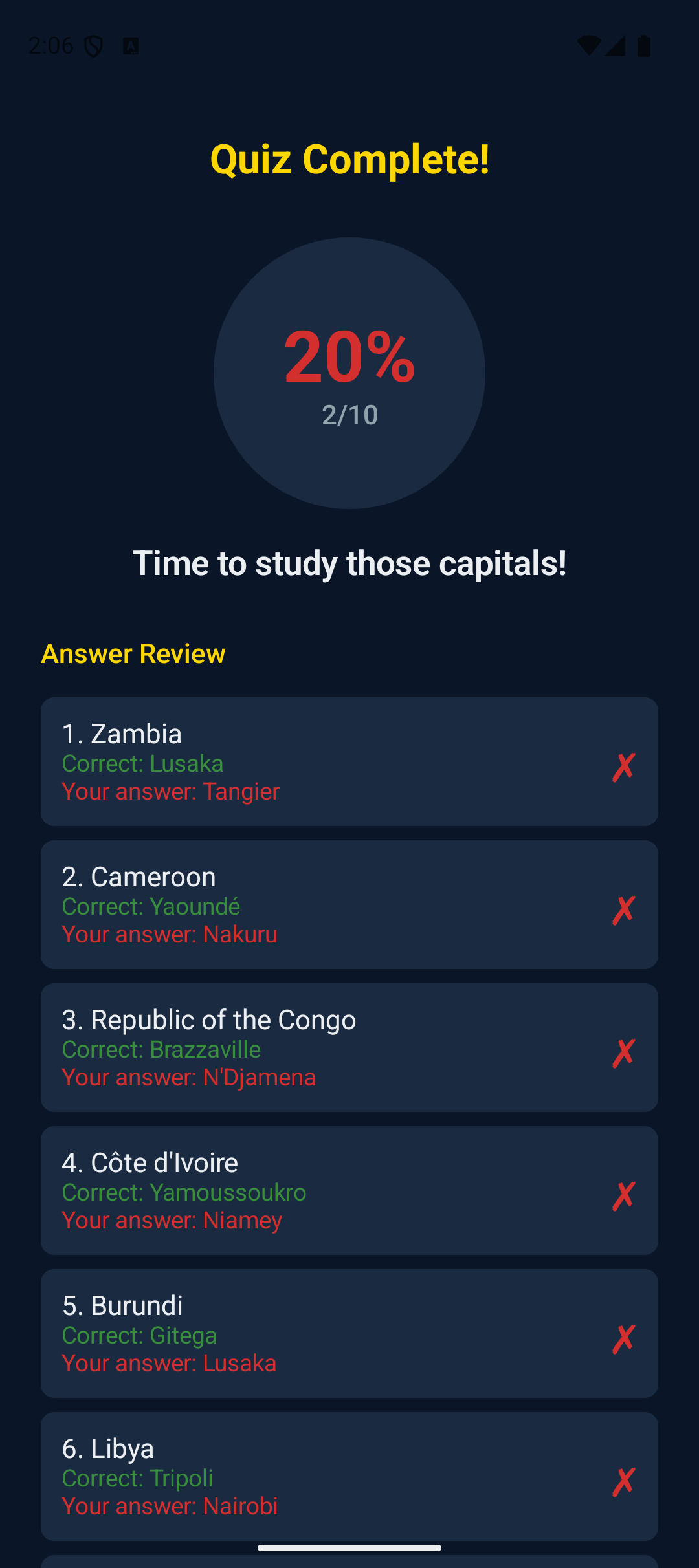
After two seconds it auto-advances to the next question. At the end you get a score circle, a performance message, and a full answer-by-answer review so you can see exactly which ones you missed.
There is also an optional 15-second countdown timer you can toggle from the home screen if you want some pressure.
The Globe
The 3D globe is powered by Globe.gl, a Three.js-based library that makes it trivial to render an interactive Earth. I bundle the minified JS, an HTML shell, and a NASA Blue Marble texture in the app’s assets folder. On Android it loads via WebViewAssetLoader so there are no file:/// permission headaches.
The HTML exposes two functions – showCapital(lat, lng) and clearMarker() – that the Kotlin side calls through evaluateJavascript. That is the entire bridge between native and web.
Tech Stack
- Kotlin + Jetpack Compose with Material 3
- MVVM architecture with
StateFlow - Globe.gl in a WebView via
WebViewAssetLoader - Gson for parsing the bundled JSON
- Python scraper (BeautifulSoup) to pull country data from Wikipedia, with a hardcoded fallback for all 54 countries
- Min SDK 24, fully offline, no INTERNET permission
Get the Source
The project is open source under the MIT license:
codeberg.org/Mufradat/africa-quiz
Clone it, build with ./gradlew assembleDebug, and install on any device or emulator running Android 7.0+.